


Comprehensive Analysis of Rock Wool Board Fire Rating
Published:
Views:
According to GB Classification for burning behaviour of building materials and products, the combustion performance of building thermal insulation materials is divided into: Class A (non-combustible), Class B1 (hardly flammable), Class B2 (flammable), Class B3 (highly flammable). Rock wool board is made of natural rocks such as basalt and diabase and belongs to inorganic mineral fibre products. Standard finished rock wool boards achieve Class A non-combustible performance, and Class A is further split into two sub-grades: A1 and A2.
I. Class A1 Rock Wool Board
This is the highest grade of non-combustible material. Under test conditions, it produces no persistent flame, no high-temperature dripping debris and extremely low heat release. It barely generates toxic smoke at high temperatures. Its melting point exceeds 1000℃; only slight shrinkage occurs under heat and it will not help fire spread.
Application scenarios: high-standard fire protection projects such as super high-rise buildings, subways, tunnels, hospitals, data centres and important public buildings.
II. Class A2 Rock Wool Board
It also falls under Class A non-combustible category. Minor short-term heat release is permitted. It must pass tests for smoke production and burning droplets and meet s1, d0 standards before being used for external wall projects. Most rock wool boards for external thin-coat rendering and curtain wall insulation on the market are Class A2, fully meeting fire acceptance codes for civil buildings and factory external wall insulation.
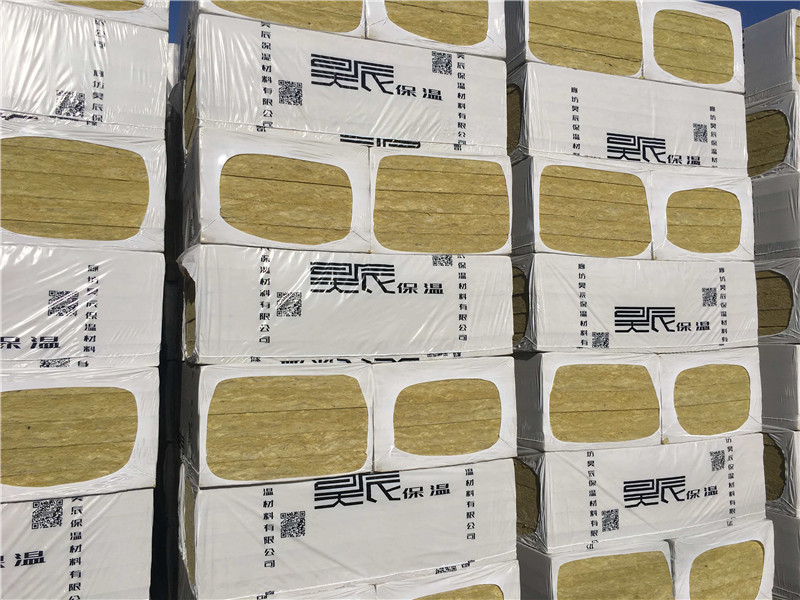
Key knowledge: pure rock wool substrate cannot reach Class B flammable grades. Only composite panels bonded with large amounts of organic foaming materials or polymer surface layers will see a drop in overall fire rating. Plain bare rock wool boards all reach Class A.
III. Notes on Fire Resistance Limit
Fire rating (combustion performance) ≠ fire resistance limit.
The fire endurance of rock wool board is jointly determined by density, thickness, fibre structure and construction details:
1. At the same thickness, high-density vertical-fibre rock wool boards of 140kg/m³, 160kg/m³ and 180kg/m³ deliver better fire stability than low-density alternatives;
2. Thicker panels provide stronger resistance to flame penetration; rock wool products ≥50mm thickness are preferred for external wall fire breaks;
3. Horizontal-fibre rock wool is mostly used for roof and equipment insulation. Vertical-fibre water-repellent rock wool board must be adopted for external wall thermal insulation, complying with JGJ/T 480.
IV. Selection Guidance for Engineering Projects
1. For high-rise external wall insulation projects, purchasers shall ask manufacturers to provide batch combustion test reports clearly marked A1/A2 grade;
2. Water-repellent treated rock wool board contains a minimal dosage of water repellent agent, which will not change its Class A fire property, so there is no risk of reduced fire performance;
3. Construction system: rock wool board shall be installed with mesh cloth and insulation anchors in accordance with specifications. Only a complete system can guarantee long-term fire and thermal insulation performance.
Langfang Haochen Insulation Materials Co., Ltd supplies professional Class A fireproof rock wool boards. We provide national standard A1 and A2 grade rock wool products, alongside rock wool blankets, rock wool strips, rock wool pipe sections, rock wool composite panels, alkali-resistant mesh cloth, insulation anchors and a full range of insulation materials. Our products apply to old residential renovation, commercial buildings, steel structure factories, curtain wall fire breaks, industrial pipe insulation and other projects. Custom density and thickness are available, and relevant test documents can be supplied with shipments. We offer one-stop supply service to help projects pass fire inspection smoothly.


