
-
 Email:
787533881@qq.com
-
 电话:
电话:15383369749
You are here: Home > Products > Rock Wool Board
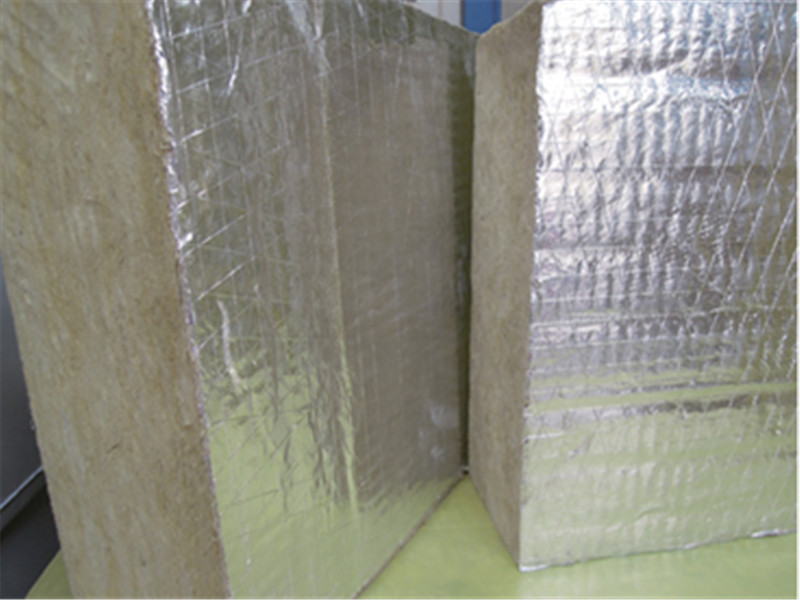
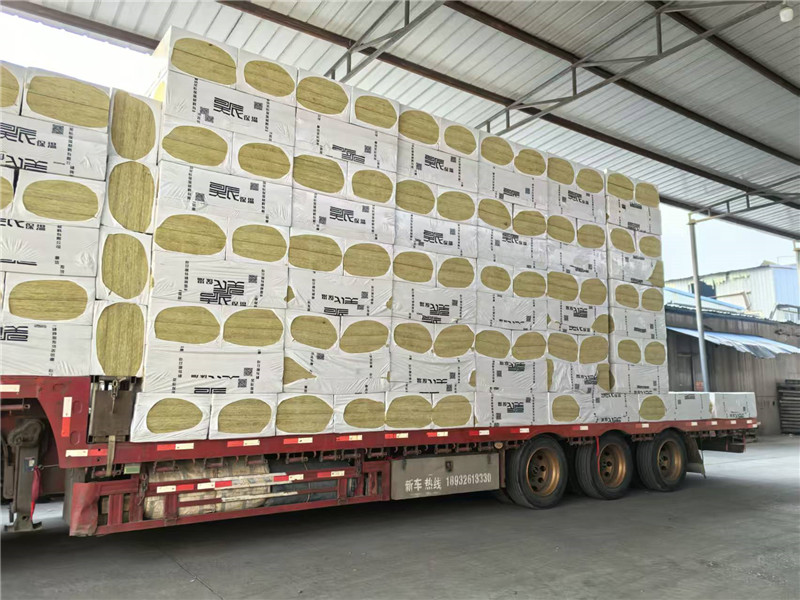
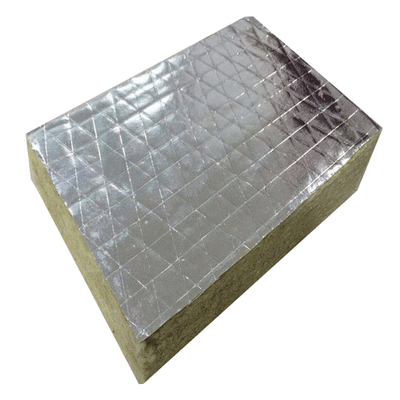
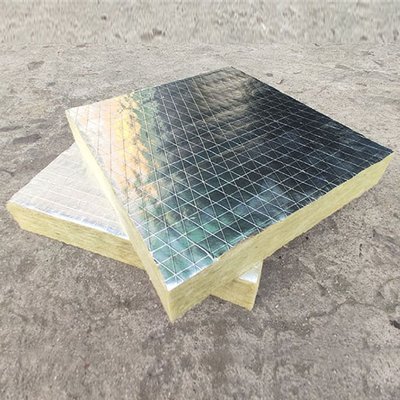
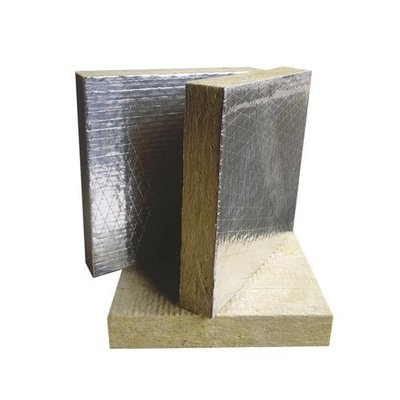
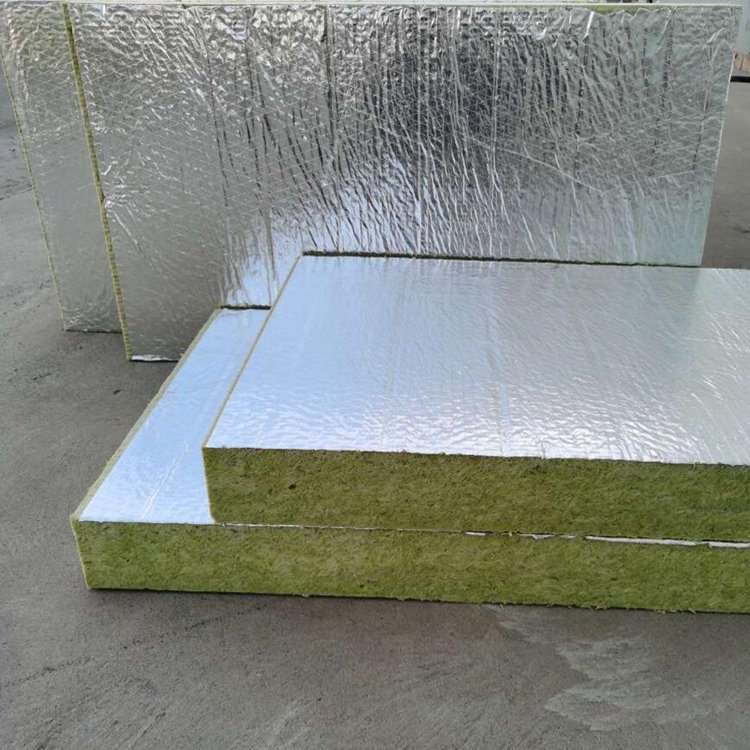
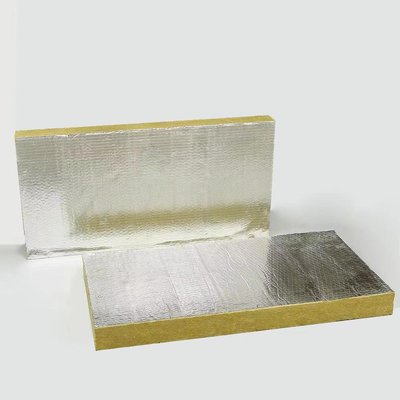
Brief Description:Aluminium foil faced rock wool board is premium A1 non-combustible insulation available in single, double and six-sided lamination. It offers vapour-proof performance for ductwork, smoke extraction and industrial pipe insulation projects.
-
Model
1200×600(15/20/30/40/50/60/70/80/90/100/110/120/130/140/150/160/170/180/190/200 -
Shipping Place
河北廊坊 -
Updated
2026-09-27 -
Views
 Products
 News
News| Standard Size | 1200×600mm(Custom‑cut sizes available upon request) |
|---|---|
| Standard Thickness | 50mm,60mm,80mm,100mm,120mm,150mm(Custom‑cut sizes available upon request) |
| Fire Rating | Class A1 Non‑combustible |
| Core Performance | Board‑core: Non‑hydrophobic standard / Hydrophobic (≥98%), optional |
| Customisable facings | Optional facings include FSK series, FP series, FB series, new‑type reinforced mesh aluminium‑foil, aluminium‑foil fiberglass cloth, W38 and VR series. |
| Application Fields | Interior partition wall, HVAC air duct, industrial equipment, steel-structure building, power plant, boiler room, computer room, indoor acoustic insulation, equipment thermal insulation, noise reduction applications |
Aluminium foil faced rock wool board is a premium insulation product manufactured by Haochen Thermal Insulation. It uses rock wool with excellent dimensional stability as the core substrate, pre-laminated with dedicated aluminium foil facing in the factory. Optional facings include FSK, FP, FB series, mesh aluminium foil, aluminium foil fibreglass cloth, W38, VR series and more, which can be selected according to project operating conditions.
The board is available in three facing configurations: single-sided aluminium foil, double-sided aluminium foil and fully wrapped six-sided aluminium foil, meeting varying grades of protection and thermal insulation requirements across diverse engineering projects.
1. Core Performance
Vapour and moisture resistance. The dense aluminium foil facing features low water vapour permeability. It blocks external moisture from penetrating into the rock wool core, reduces the risk of internal condensation and prevents performance degradation of the board caused by water absorption.
Note: The aluminium foil layer acts solely as a vapour barrier to mitigate condensation risk. It is not a waterproof layer and cannot substitute structural waterproofing.
Reduced fibre shedding. The aluminium foil facing encases the rock wool surface, minimising fibre release during cutting and installation. The core material retains robust fibre strength with intact fibres at cut edges.
Dimensional stability. Finished boards have a high surface flatness. They resist deformation under temperature fluctuations and minor vibration, maintaining structural integrity over long service life.
Flexible facing solutions. Single-sided, double-sided and fully wrapped configurations are available to satisfy high-standard protection and insulation requirements for a wide range of projects. Special structures can be custom-made on request.
2. Application Sectors
Building and HVAC systems: HVAC ducts, smoke extraction ducts, cleanrooms, equipment plant rooms, high-humidity workshops.
Industrial insulation: Industrial pipelines, storage tanks, boiler plant, flues and waste heat pipelines.
Other applications: Core material for sandwich panels, partition wall filling, ceiling sound absorption.
3. Why Choose Aluminium Foil Facing
The aluminium foil layer serves two primary functions. Firstly, it works as a vapour barrier. Its extremely low water vapour permeability prevents external moisture ingress into the rock wool core, lowering the risk of internal condensation and decay of insulation performance. Secondly, it reflects radiant heat. The reflective foil surface cuts radiant heat transfer and raises the overall thermal resistance of the insulation system without increasing board thickness.
Compared with unfaced rock wool boards, the aluminium foil faced design also reduces fibre shedding at cut edges and during handling, lowering dust levels on site and improving working conditions for installers.
4. Usage Precautions
Aluminium foil facing is recommended for use within enclosed assemblies to deliver vapour barrier and heat reflection functions.
For long-term outdoor exposure or environments with intense ultraviolet radiation, fibreglass-reinforced aluminium foil facing together with outer metal cladding is recommended.
This product is not suitable for External Thermal Insulation Composite Systems (ETICS). The aluminium foil facing prevents effective bonding between the insulation layer and render coat.
5. Core Material Selection
Two types of rock wool core are available: basalt rock wool (recommended) and economical rock wool. Selection can be made according to project budget, ambient conditions and technical requirements.
| Item | Basalt Rock Wool (Recommended) | Economical Rock Wool |
|---|---|---|
| Raw Materials | High-purity basalt, diabase volcanic rock | Industrial slag |
| Manufacturing Process | Melted at approx. 1500 °C, centrifugally fibre-formed, three-dimensional fibre laying, high-pressure curing and cutting | Slag melting, centrifugal fibre formation, high-pressure sizing and cutting |
| Coefficient of Acidity | ≥1.8 | ≥1.2 |
| Hydrophobic Rate | ≥98% | ≥95% |
| Tensile Strength (TR) | ≥10 / ≥15 kPa | ≥7.5 kPa |
| Thermal Conductivity | ≤0.040–0.046 W/(m·K), varies with density | ≤0.045–0.050 W/(m·K), varies with density |
| Reaction to Fire | Class A1 (GB 8624-2012) | Class A1 (GB 8624-2012) |
| Recommended Applications | Smoke extraction ducts, high-humidity workshops, industrial pipelines, vibrating equipment, exposed sandwich panels | General insulation in dry and stable environments |
| Unsuitable Scenarios | — | High-humidity environments, prolonged UV exposure, frequent vibration, highly stressed structural sections |
Properties of Basalt Rock Wool
High-purity basalt and diabase volcanic raw materials are melted at roughly 1500 °C and spun into fine inorganic mineral fibres. Hydrophobic additives are incorporated into the fibres, followed by three-dimensional fibre laying, high-pressure curing and precision cutting. The finished fibres feature high toughness and a high coefficient of acidity, delivering outstanding temperature resistance, anti-ageing and moisture-resistant properties.
Properties of Economical Rock Wool
Manufactured from industrial slag with a lower unit cost. It achieves the same A1 fire classification as basalt rock wool and suits conventional insulation projects where budget is prioritised.
Both grades are fully inorganic. They do not burn, drip molten material or release toxic fumes when exposed to open flame. After lamination with aluminium foil, the boards retain rock wool’s excellent thermal and acoustic insulation properties. The aluminium foil layer reflects radiant heat to further boost overall insulation efficiency.
Selection Recommendation: Basalt rock wool is preferred where budget permits. Economical rock wool is only recommended for dry, non-exposed and vibration-free operating conditions.
6. Installation Characteristics
Simple on-site cutting. Boards feature flat surfaces and uniform texture, enabling flexible cutting to site dimensions. The clean aluminium foil facing reduces fibre release during fabrication and lowers dust exposure for operatives.
Direct installation. Pre-laminated single-sided / double-sided / fully wrapped aluminium foil boards can be fitted directly without secondary on-site protection. Ideal for prefabricated factory duct insulation and field insulation works for pipelines and plant rooms.
Long-term dimensional stability. Finished boards resist deformation under thermal cycling and minor vibration, retaining structural integrity throughout their service life.
Reference installation guidance
| Location | Installation Method |
|---|---|
| Duct insulation fixing | Insulation stud spacing ≤350 mm with aluminium foil washers; ≥16 studs/㎡ for undersides, ≥10 studs/㎡ for side walls, ≥8 studs/㎡ for top surfaces |
| Joint treatment | Overlap ≥80 mm with staggered joints; cross joints are prohibited. Seal all joints with aluminium foil tape |
| Penetrations through walls and floor slabs | Insulation wrapped and extended ≥200 mm on both sides of penetration |
| Flange and valve zones | Insulation thickness at flanges increased to 1.5 times board thickness; access openings reserved for valve maintenance |
| Pipe supports and hangers | Insulation interrupted at supports; supports individually insulated |
| Metal outer cladding | Double-sided aluminium foil + steel band or metal cladding; overlaps laid in the direction of water run-off |
7. Technical Data
Values shown are typical reference figures, measured in accordance with the standards stated. Actual values vary with density and test conditions and shall be subject to official test reports. Thermal conductivity test condition: mean temperature of 25 °C, GB/T 10295.
Physical Parameters
| Item | Parameter |
|---|---|
| Standard Dimensions | 1200 × 600 mm; custom sizes available |
| Dimensional Tolerance | Length ±3 mm; Width ±2 mm; Thickness ±2 mm |
| Available Thickness | 30 / 50 / 80 / 100 / 120 / 150 / 200 mm (other thicknesses on request) |
| Available Density | 80 / 100 / 120 / 140 / 160 kg/m³ (other densities customisable) |
| Thermal Conductivity | ≤0.040–0.046 W/(m·K), varies with density |
| Fire Classification | A1 (GB 8624-2012) |
| Standard Tensile Strength (TR) | ≥10 / ≥15 kPa (GB/T 25975-2018) |
| Tensile Strength for Economical Grade (TR) | ≥7.5 kPa |
| Hydrophobic Rate | ≥98% (Standard Grade) / ≥95% (Economical Grade), GB/T 10299 |
| Coefficient of Acidity | ≥1.8 (Standard Grade) / ≥1.2 (Economical Grade) |
| Mean Fibre Diameter | ≤6.0 μm |
| Shot Content | ≤7.0% |
| Maximum Service Temperature | 650 °C (subject to temperature resistance of aluminium foil facing) |
| Facing Types | Single-sided reinforced aluminium foil, double-sided reinforced aluminium foil, six-sided fully wrapped; custom structures available |
Density Selection Guide
| Density (kg/m³) | Recommended Application |
|---|---|
| 80–100 | General HVAC ducts, conventional external pipe insulation |
| 100–120 | Preferred grade for ventilation ducts, balancing insulation performance and mechanical strength |
| 120–140 | Industrial pipelines, mechanical equipment, plant room insulation |
| 140–160 | Smoke extraction ducts, heavy-duty equipment, vibration-prone environments |
8. Customisation & Technical Support
Haochen Thermal Insulation offers customisation of board thickness, density and dimensions. Equipped with mature lamination production lines, we carry out adhesive lamination for multiple aluminium foil facings. Strict controls are implemented across all manufacturing stages to guarantee stable performance and smooth board surfaces.
Key indicators such as adhesive temperature resistance and peel strength of aluminium foil facing shall be based on test reports. Bond strength between facing and core substrate complies with product technical specifications. Fully wrapped boards can be supplied to reduce secondary protective work on site.
9. Engineering Selection Guide
Follow this standard workflow for accurate material matching:
Confirm operating conditions: medium temperature, ambient humidity, exposure status and vibration frequency.
Define facing configuration: single-sided, double-sided or fully wrapped.
Select suitable density according to project requirements.
Calculate required board thickness from thermal conductivity to meet design insulation targets.
Confirm dimensions from drawings or site survey for custom cutting.
Quick Selection Reference
| Operating Condition | Recommended Configuration | Recommended Density |
|---|---|---|
| HVAC ventilation ducts | Single-sided aluminium foil + insulation stud fixing | 100–120 kg/m³ |
| Smoke extraction ducts | Double-sided / fully wrapped aluminium foil + fire sealing | 140–160 kg/m³ |
| Industrial pipelines | Double-sided aluminium foil + steel band / metal outer cladding | 120–140 kg/m³ |
| Plant room and equipment insulation | Single / double-sided lamination | 120–140 kg/m³ |
| High-humidity workshops | Fully wrapped construction | 140–160 kg/m³ |
| Cleanrooms | Single-sided lamination to control fibre release | 100–120 kg/m³ |
Fire Resistance Note: To achieve a specified fire resistance integrity (EI) for smoke extraction ductwork, the complete system must undergo system testing to GB/T 17428. A1 classification only describes the fire behaviour of the material alone and does not equate to the fire resistance rating of the full duct assembly (EI 30 / EI 60 / EI 120).
10. FAQ
Q: What is the difference between basalt rock wool and economical rock wool?A: Basalt rock wool is made from high-purity basalt and diabase, with coefficient of acidity ≥1.8 and hydrophobic rate ≥98%. Economical grade uses industrial slag, with coefficient of acidity ≥1.2 and hydrophobic rate ≥95%. Both are A1 non-combustible. Basalt rock wool is recommended for smoke extraction ducts, high-humidity workshops, industrial pipelines and vibrating conditions.
Q: Can aluminium foil faced rock wool board be used for external wall insulation?A: No. It is not suitable for External Thermal Insulation Composite Systems (ETICS). The aluminium foil facing prevents bonding between insulation and render coat. The product is intended for duct insulation, pipework insulation, industrial equipment and other indoor applications.
Q: What density should be selected for smoke extraction ducts?A: 140–160 kg/m³ is recommended for smoke extraction ducts and heavy-duty equipment, with tensile strength TR ≥15 kPa.
Q: Can the aluminium foil layer eliminate condensation completely?A: As a vapour barrier, aluminium foil has low water vapour permeability and reduces condensation risk. It is not a waterproof layer and cannot replace structural waterproofing.
Q: Can the boards be exposed directly to sunlight outdoors?A: Aluminium foil facing is intended for use within enclosed assemblies. For long-term outdoor sun exposure and high UV environments, fibreglass-reinforced aluminium foil plus metal outer cladding should be adopted.
Q: What is the standard size and is customisation available?A: Standard size is 1200×600 mm, thickness range 30–200 mm, density 80–160 kg/m³. Dimensions, thickness and density can be customised on request.
Q: How is the A1 fire rating certified?A: The product achieves A1 non-combustible classification in accordance with GB 8624-2012. Final status is subject to our GB 8624-2012 test report, report No.【Z260104006】, available on request from our sales team.
Q: What is the thermal conductivity and how does it change with temperature?A: Thermal conductivity ≤0.040–0.046 W/(m·K) at mean temperature of 25 °C, varying by density. Tested to GB/T 10295, report No.【Z260104006】.
Q: What is the MOQ and lead time?A: Minimum order quantity: 1 cubic metre. Standard lead time: 3–7 working days. Lead time for custom specifications to be separately agreed. Please confirm details with our sales representative.
Haochen Thermal Insulation provides selection consultancy and complete insulation solutions tailored to project conditions, supplying stable and reliable aluminium foil faced rock wool insulation materials for engineering works worldwide.
 上一篇:
上一篇: