

Thermal & Acoustic Internal Wall Insulation Rock Wool
Published:
Views:
Many buildings suffer from fluctuating indoor temperatures, high heating and cooling costs, and noise transfer between rooms, especially for dividing walls, street‑facing internal walls, office partitions and factory partitions. Thermal & Acoustic Internal Wall Insulation Rock Wool is specially developed for internal wall cavity renovation. It delivers three core performances: thermal control, sound absorption and Class A fire resistance. As an original manufacturer, Haochen Insulation gives you a full introduction below.
Internal wall rock wool provides stable thermal insulation and cuts energy consumption. The interlaced mineral micro‑pores inside rock wool effectively block heat transfer. It retains indoor heat in winter and reduces heat loss, while blocking outdoor heat penetration in summer and easing the load on air conditioning. It improves the cold bridge issue of walls, stabilises indoor temperature and saves heating and cooling expenses over time.
Acoustic absorption reduces noise leakage and improves privacy. This refers to the acoustic performance in the title. The tangled fibre structure of rock wool absorbs sound waves, weakening voices, footsteps and equipment noise and reducing airborne sound transmission between rooms. It brings obvious noise reduction for household dividing walls, quiet offices and machine room partitions. Please note rock wool is a sound‑absorbing material. Its acoustic performance can be fully realised only when used with a light steel stud cavity system.
Class A non‑combustible inorganic material to meet fire safety requirements. Thermal & Acoustic Internal Wall Insulation Rock Wool is Class A non‑combustible inorganic insulation with a high melting point. It will not spread flames or release large volumes of toxic smoke in fire. It helps residential, factory, retail and commercial partitions pass fire inspections easily.
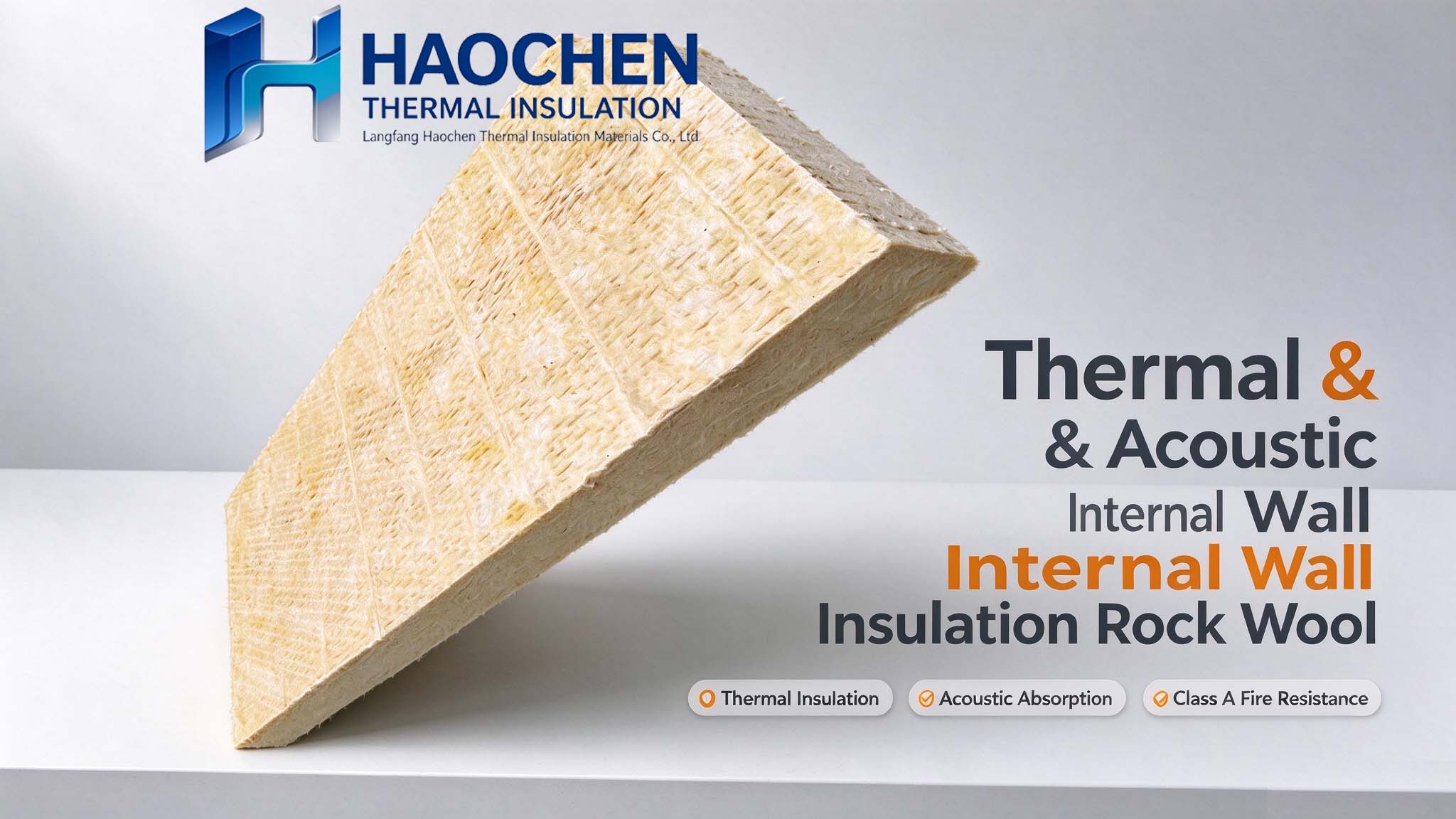
Application scenarios. It is suitable for household dividing walls, bedroom partitions, street‑facing internal walls, factory partitions, office partitions, machine room noise reduction walls and shop internal wall renovation. It is ideal for all internal cavity projects requiring energy saving, quietness and fire protection.
Main construction method: light steel stud cavity filling. Cut rock wool boards to size and fit them between vertical studs. Lay boards with staggered joints to avoid straight through‑gaps, which damage both thermal and acoustic performance. Fix plasterboards on the outer side after filling and seal all joints properly to minimise thermal bridges and sound bridges. Secure components with rock wool expansion anchors for stable installation.
Key construction notes. Inspect the wall substrate before installation. If the wall is damp or leaking, damp‑proof treatment must be completed first. Moisture trapped inside the insulation will cause condensation and mould over time and degrade thermal and acoustic performance. Avoid installation in rainy or highly humid conditions. Ventilate the space after completion to discharge residual moisture inside the wall assembly. Do not mix this internal wall rock wool with mineral fibre ceiling tiles. Mineral fibre tiles have low density and poor strength; they are only designed for ceiling sound absorption and are not suitable for long‑term internal wall thermal and acoustic insulation.
Guidance for board selection. Thermal & Acoustic Internal Wall Insulation Rock Wool comes in various densities and thicknesses. Low‑density grades focus on thermal insulation, while medium and high‑density rock wool balances thermal performance and acoustic absorption better. Tell your supplier your wall condition, insulation target and noise reduction requirements. Haochen Insulation can supply matching rock wool boards and complete test reports.
Summary. Thermal & Acoustic Internal Wall Insulation Rock Wool is not a single‑function insulation material. It is an all‑in‑one renovation solution combining thermal insulation, acoustic noise reduction and fire resistance. With proper density and thickness selection, standard cavity installation and reliable damp‑proof sealing, it can maintain stable thermal and acoustic performance for a long service life.


 Hot Picks