

Flat and Pitched Roof Rock Wool Board Buying Guide
Published:
Views:
Haochen Thermal Insulation is a professional manufacturer of rock wool boards. Today we share key points for selecting rock wool boards for flat roofs and pitched roofs. Roof insulation is a vital part of building energy conservation. Flat roofs and pitched roofs differ greatly in structure, drainage and load conditions. Many buyers choose the same type of rock wool board for both, which may lead to moisture absorption, deformation and reduced insulation performance over time.
For roof applications, Class A non-combustible basalt rock wool is the preferred option. It is made from natural volcanic rocks such as basalt and diabase, melted at over 1400°C. The finished product has stable water-repellent properties and resists penetration by rainwater and condensation, making it suitable for exposed roof conditions. Pitched roofs are usually fitted with roof tiles and waterproof membranes. The insulation layer is exposed to large temperature swings and prone to condensation, so water repellency is a critical parameter to verify during procurement.
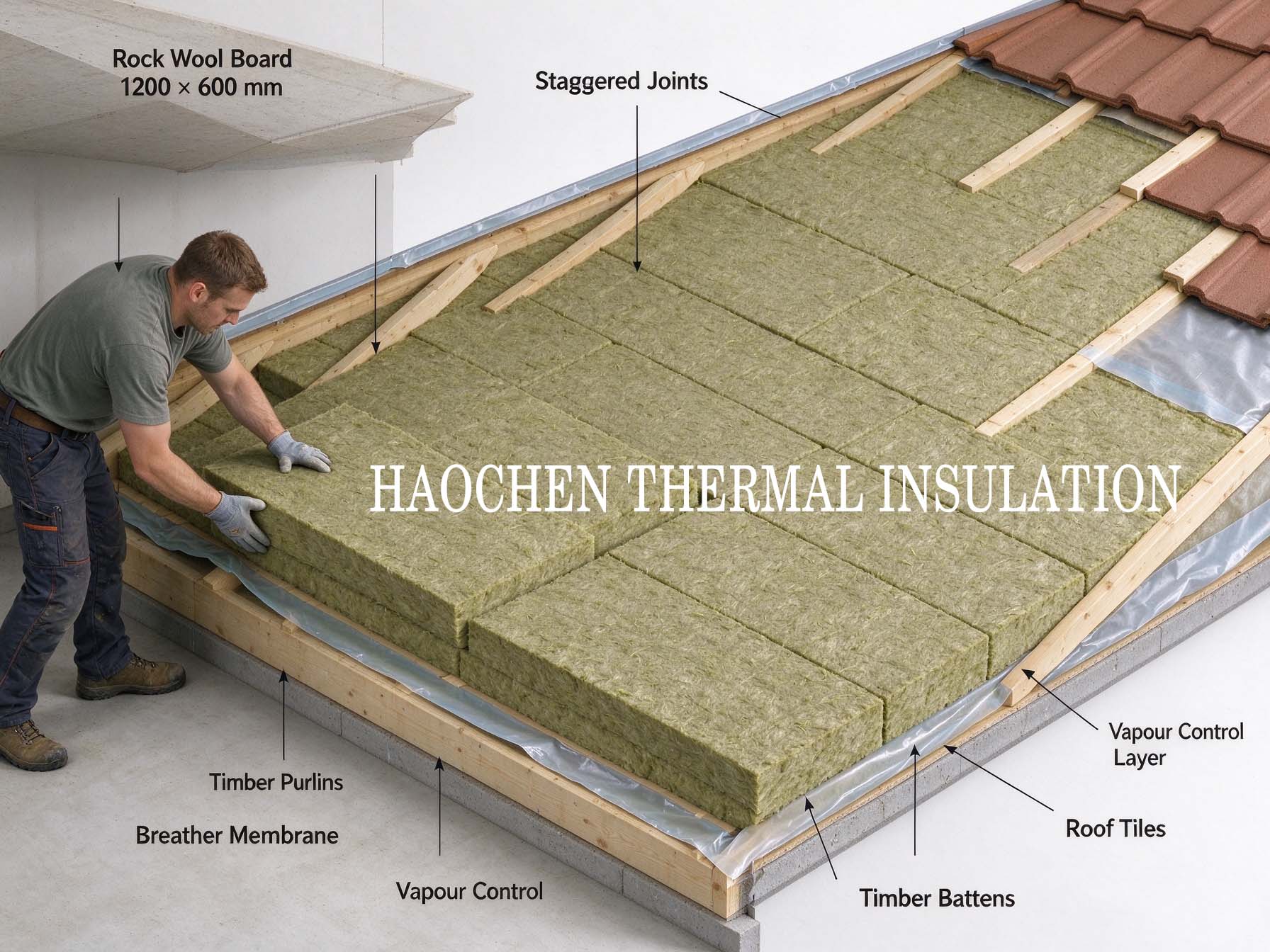
Density is a core specification for roof rock wool boards. For accessible flat roofs, high-density rock wool board is recommended for its superior compressive strength to withstand maintenance loads. Most pitched roofs are non-accessible; rock wool boards with suitable density and good flexibility are preferred. They fit neatly along the roof slope and fill the space between purlins. Rock wool with insufficient density lacks compressive resistance and tends to settle after long-term use. This breaks the insulation layer and creates thermal bridges, raising energy consumption.
Thermal conductivity is another key factor. A lower thermal conductivity delivers better thermal insulation. It blocks outdoor heat from entering the building in summer and reduces indoor heat loss in winter to save energy. You should also check the acidity coefficient. Products with a high acidity coefficient offer better ageing resistance; their fibres do not easily degrade outdoors for a longer service life.
For installation, ensure proper joint overlap and sealing on pitched roofs, together with waterproof and vapour control layers. The vapour control layer is often overlooked on pitched roofs. Indoor moisture migrating upwards can accumulate inside the rock wool, drastically lowering insulation performance and causing mould growth. For flat roofs, adequate falls and drainage must be arranged to prevent standing water from soaking the insulation layer.
Many customers confuse roof rock wool with ordinary indoor sound-absorbing insulation. Indoor mineral wool boards and low-density glass wool are not suitable for roofs. They lack water repellency, compressive strength and weather resistance and will fail rapidly when exposed outdoors. Always use rock wool specially designed for roof insulation.
In summary: compressive strength is the main consideration for flat roofs, while water repellency and installation flexibility matter most for pitched roofs. When purchasing roof rock wool boards, inform us whether it is a flat roof or pitched roof, whether the roof is accessible, the roof structure and required energy-saving parameters. Haochen Thermal Insulation will match the correct specification of rock wool board for your project.
Previous Article
Fire, Sound and Thermal InsulaNext Article
Internal Wall Insulation: Rock

 Hot Picks