

Rock Wool Insulation Board vs Glass Wool: Key Performance Differences
Published:
Views:
When selecting thermal insulation for building projects, rock wool boards and glass wool are two primary mineral fibre insulation materials widely used across the industry. Many contractors, architects and project owners frequently compare their respective properties. Both materials deliver thermal insulation and acoustic damping, yet their inherent material characteristics differ substantially. Featuring A1 non-combustible classification, water repellency, high structural stability and an extended service life, rock wool boards excel in demanding applications such as commercial buildings, external walls and damp environments. Glass wool is lightweight, available at a lower procurement cost and simple to cut on site, making it more suitable for internal thermal insulation in conventional residential projects. This article compares the core properties of both materials in detail to support accurate material selection based on project conditions.
Comparison Table: Rock Wool Board VS Glass Wool
| Property | Rock Wool Board | Glass Wool |
|---|---|---|
| Raw Material & Manufacturing | Produced from basalt volcanic rock, melted at temperatures above 1450°C and spun into rigid mineral fibre boards via centrifugal forming. | Made from quartz sand and recycled glass, melted and drawn into fine fibres. Contains no harmful chemical substances, commonly supplied as flexible rolls and lightweight boards. |
| Thermal Insulation | Consistent thermal performance; thermal conductivity barely deteriorates under high-temperature conditions and maintains stable performance over long-term service. | Excellent thermal resistance at ambient temperature, though performance declines when exposed to sustained high heat. |
| Acoustic Performance | Outstanding sound absorption, highly effective for low-frequency noise reduction. Ideal for plant rooms and partition wall acoustic control. | Good sound insulation, especially effective for mid-to-high frequency sound absorption, suited to general internal acoustic treatment. |
| Fire Resistance | A1 non-combustible, with an operating temperature range of 640℃~750℃. It retains its shape at high temperatures without melting or dripping, and provides passive fire protection. | Non-combustible material with an operating temperature range of -180℃~480℃. It softens and shrinks under continuous high heat and is not suitable for fire separation applications. |
| Moisture Resistance | Naturally water-repellent structure allowing rapid water drainage. Thermal and mechanical properties remain largely unchanged after drying, making it suitable for damp areas. | Poor moisture resistance. A vapour barrier must be installed in humid environments; thermal performance drops sharply once saturated with water. |
| Sustainability | Recyclable, though the production process consumes more energy. Its excellent ageing resistance delivers better environmental performance across the full lifecycle. | Manufactured with up to 75% recycled glass content, with lower production energy consumption and eco-friendly properties. |
| Service Life | Approximately 75 years. Resists settlement and deformation over long-term use with superior durability. | Approximately 55 years, designed for long-term use in dry conventional indoor environments. |
| On-site Handling | Rigid board with stable form. Slightly trickier to cut and maintains shape well under load, resisting collapse. | Lightweight and flexible, simple to cut and able to fit uneven substrate surfaces. |
| Irritation During Installation | Fibres may irritate skin, eyes and respiratory tracts. Full protective gear must be worn during installation. | Lower fibre irritation and softer texture; some variants offer improved handling properties. |
| Cost | Higher raw material and production costs lead to a higher unit price, yet it delivers competitive value over the full project lifecycle. | Lower upfront material cost, a cost-effective option for budget-focused projects. |
| Application Scenarios | External wall continuous insulation, rainscreen cladding, fire partitions, screed under concrete floors, basements, steel structure fire protection and roof insulation for public buildings. | Internal residential walls, suspended ceilings, timber frame construction, general roofing, HVAC duct insulation; for dry indoor environments only. |
Rock wool board is a high-performance rigid insulation material combining A1 non-combustibility, water repellency, strong acoustic attenuation, load resistance and long service life. It copes reliably with complex project conditions involving high temperatures, moisture and strict fire codes, and is widely adopted in commercial and public infrastructure projects. Glass wool is a lightweight flexible insulation material with simple installation and low cost, mostly used for internal insulation in standard residential buildings.
What is Rock Wool Board?
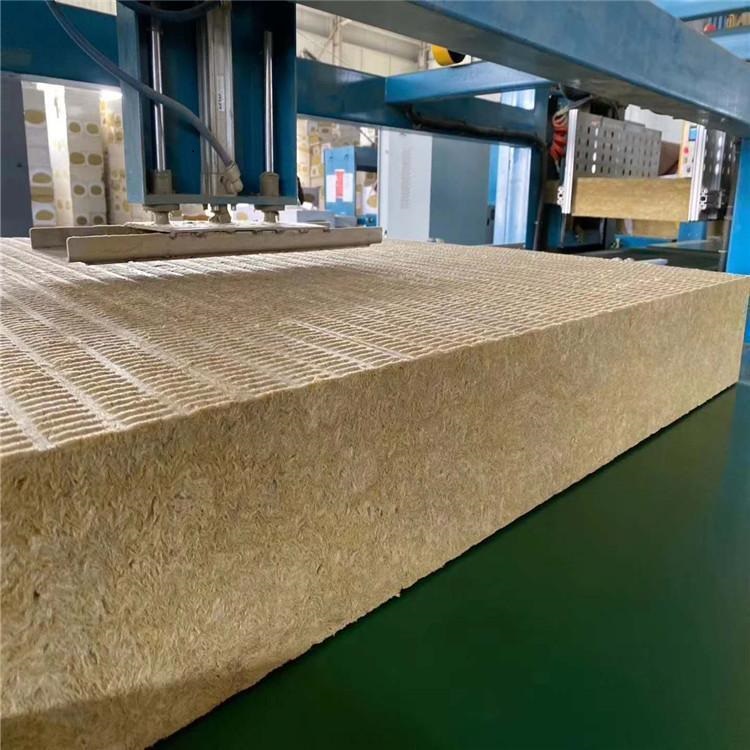
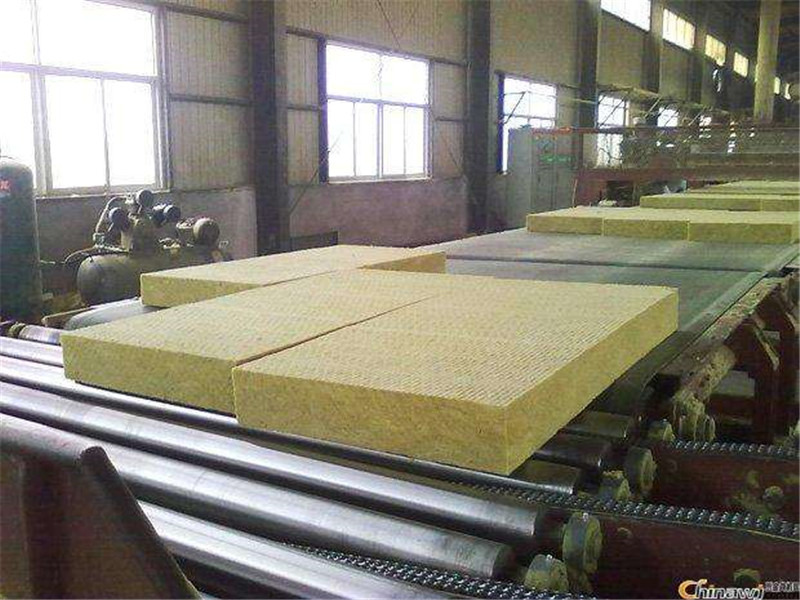
Rock wool board, also known as stone wool, is manufactured from basalt volcanic rock. The raw material undergoes ultra-high temperature melting before being centrifuged into fine mineral fibres and formed into rigid insulation boards.
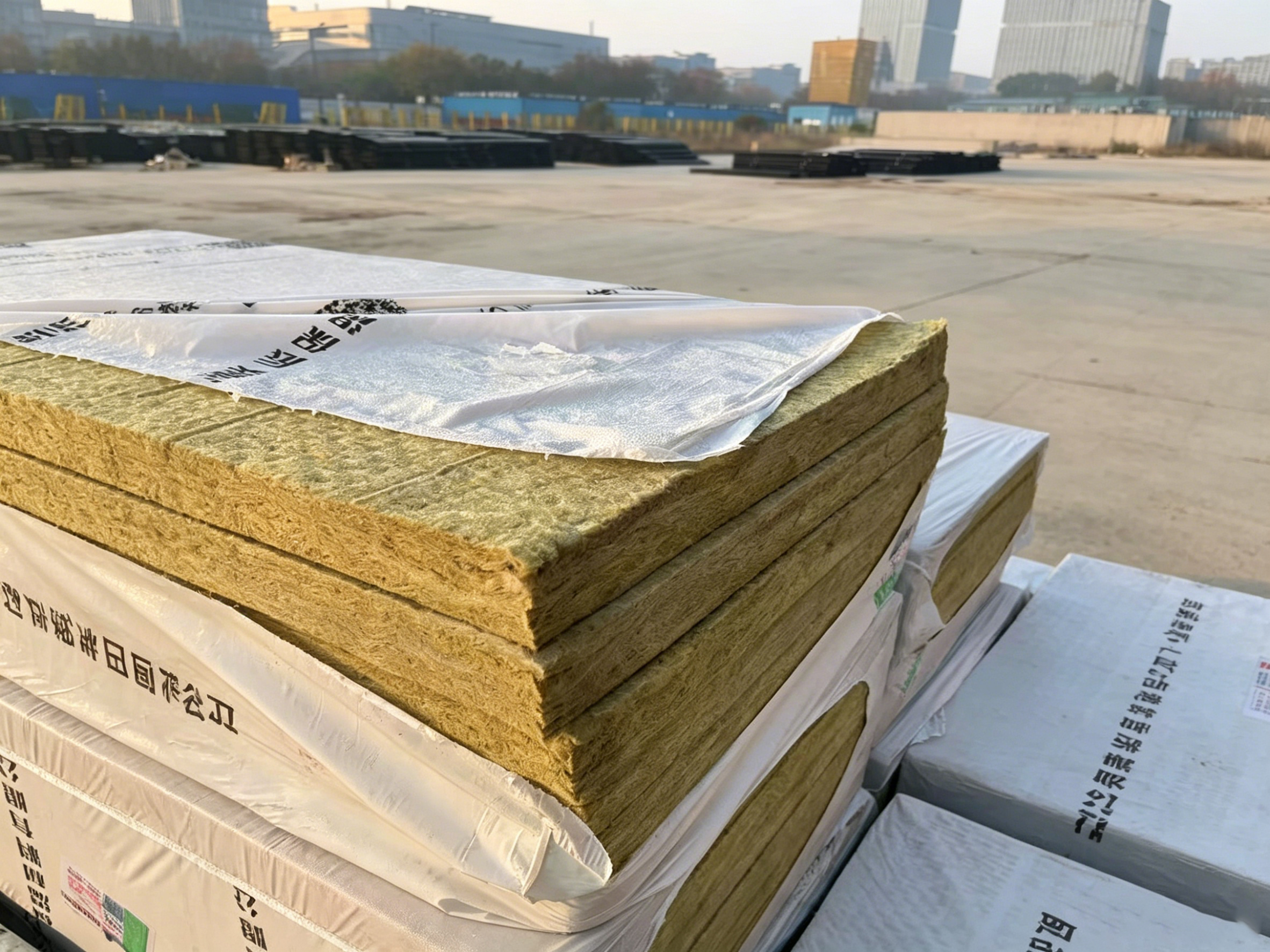
The material features robust construction and exceptional dimensional stability. Classified A1 non-combustible, it has an operating temperature range of 640℃~750℃. It boasts strong water repellency and excellent low-frequency noise reduction. It is commonly specified for partition walls, screed under concrete floors, external continuous wall insulation and fire compartment walls. Even under prolonged humid or high-temperature conditions, its thermal and mechanical properties stay stable, making it a high-performance insulation material widely used in public building projects.
What is Glass Wool?
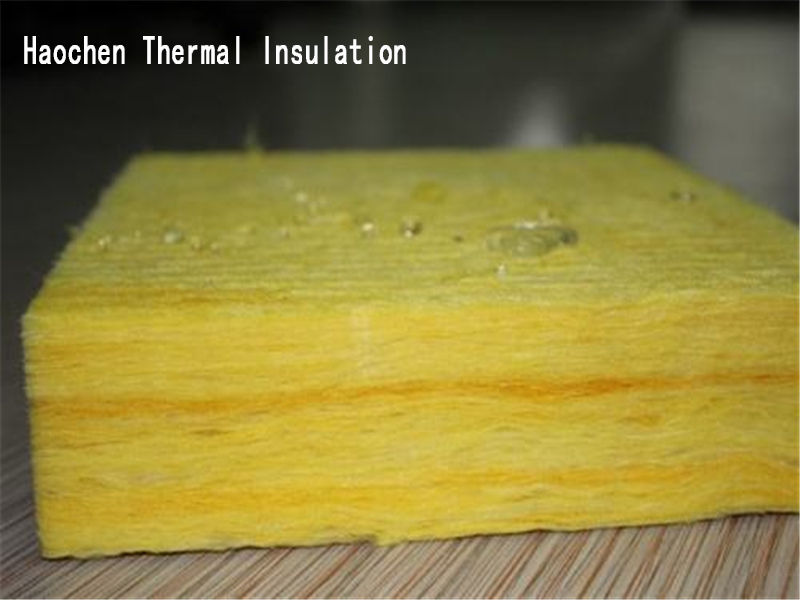
Glass wool is a widely adopted insulation material, produced by melting quartz sand and recycled glass then drawing the mixture into fine fibres. It is lightweight, flexible and easy to cut, conforming well to uneven substrate surfaces. Premium glass wool contains no harmful substances and causes minimal irritation during installation.
Glass wool has an operating temperature range of -180℃~480℃. It delivers good thermal insulation at ambient temperature and is non-combustible with eco-friendly characteristics. However, it has notable limitations in humid conditions. Where moisture is present, a vapour barrier or alternative insulation such as EPS bead insulation is required. Glass wool is extensively used for roof, wall, ceiling and floor insulation, acting as a cost-effective thermal solution for energy-efficient homes.
When to Choose Rock Wool Board or Glass Wool?
The selection between rock wool board and glass wool depends on site conditions, insulation objectives and relevant specification requirements.
Select rock wool board when:
The project requires strict fire compliance and passive fire protection, such as external walls and fire partitions.
The site carries moisture risk, for instance basements or water-prone areas, requiring water-repellent insulation.
Noise control is the primary requirement, especially reduction of low-frequency noise in plant rooms or partition walls.
The material needs to bear loads, such as beneath concrete screed or for impact-resistant walls.
Select glass wool when:
High thermal resistance at ambient temperature is required while keeping initial material costs low.
The substrate surface is uneven or access is restricted, requiring flexible material to fill gaps.
Internal insulation for standard residential buildings: internal walls, ceilings, timber frame structures and roofing in dry environments.
In terms of pricing, glass wool has lower upfront procurement costs. Rock wool has heavier raw materials and more demanding production processes, resulting in a higher unit price. Even so, both materials remain cheaper than alternatives such as PIR insulation.
Installation Guidelines & Practical Tips
Both rock wool board and glass wool are mineral fibre insulation materials and can be cut and fitted on site. Rock wool boards are stiffer and heavier, retaining shape well. They resist deformation and collapse when fitted vertically or under load-bearing floors. Glass wool is flexible and available in rolls or boards. It fits neatly between joists and within narrow gaps to minimise air voids.
Fibres from both materials may irritate skin, eyes and respiratory passages. During installation, always wear gloves, long-sleeved workwear, safety goggles and a dust mask. Some glass wool variants have softer fibres and reduced irritation during installation.
Professional Material Selection Advice
Rock wool board and glass wool both fall under mineral fibre insulation, yet their core performance priorities differ greatly. The best choice depends entirely on project site conditions.
For projects involving external walls, fire compartments, damp basements or plant room noise control, rock wool board is the more reliable option. It is A1 non-combustible, water-repellent, load-bearing and long-lasting, delivering superior stability for long-term engineering applications. If only internal residential insulation is needed, with a priority on budget and simple installation, glass wool is a suitable economical solution.
We provide customised thermal insulation consultancy to help you select the right material for your project and achieve long-term energy savings. Request a free insulation survey to identify the optimal solution for your requirements.
Previous Article
Advantages and Disadvantages oNext Article
What Are the Downsides of Rock

 Hot Picks