

What is the difference between rock wool board and mineral wool board
Published:
Views:
Many customers and construction units are not very clear about rock wool board and mineral wool board, and often confuse the two products. In fact, there are many differences between these two materials in product performance, technical parameters and construction application methods. They have one thing in common: both are artificial fiber Class A non-combustible thermal insulation materials, slightly similar in appearance and both in plate form. Many purchasers and construction personnel can hardly distinguish them quickly only by appearance.
Common features: Both are artificial fiber Class A non-combustible thermal insulation boards with similar appearance. They have basic properties of fire resistance, heat preservation and sound absorption, and are easily confused by many purchasers and construction workers.
| Comparison Item | Rock Wool Board | Mineral Wool Board |
|---|---|---|
| Main Raw Material | Basalt | Blast furnace slag and other metallurgical residues |
| Melting Temperature | About 1400℃ | About 1200℃ |
| Production Process | Pleated after web forming before curing, with interwoven W-shaped random fibers inside, fibers interlock with each other | Directly cured after web forming, no pleating process, fibers are straight and loose |
| Density Range | 120–200kg/m³; 140kg/m³ and above commonly used for exterior wall thin-plaster system | 45–120kg/m³, wide range; low density mainly for sound absorption |
| Compressive Strength | 40–60kPa | Low |
| Tensile Strength | 7.5–15kPa | Low |
| Water Repellency | Water-repellent type available; water-repellent version mandatory for exterior wall projects | Water-repellent type available; not suitable for direct rain exposure or high-humidity open environment |
| Application Scenarios | Exterior wall thin-plaster thermal insulation system, roof insulation, steel structure fire protection, pipeline & equipment insulation, machine room noise reduction | Curtain wall cavity filling, industrial equipment and pipeline insulation, sound insulation in dry indoor areas |
| Structural Features | High integrity, good tear resistance and wind pressure resistance, suitable for load-bearing exterior wall systems | Loose fiber structure, low mechanical bearing capacity. Not allowed for exterior wall thin-plaster systems |
| Customization Service | ✅ Custom sizes, thicknesses, densities and water repellency available at Haochen Insulation | ✅ Customization available upon request at Haochen Insulation |
Brief Description
Rock wool board features W-shaped random fiber structure formed by pleating, delivering outstanding mechanical performance, which makes it the first choice for exterior wall thin-plaster insulation. Mineral wool board has low strength and is suitable for enclosed cavities and dry indoor locations. When selecting materials, please check the test report carefully, focusing on parameters such as density, tensile strength, compressive strength and water repellency rate to avoid hidden dangers like falling off and cracking caused by wrong material selection.
1. Differences in Raw Materials and Melting Temperature
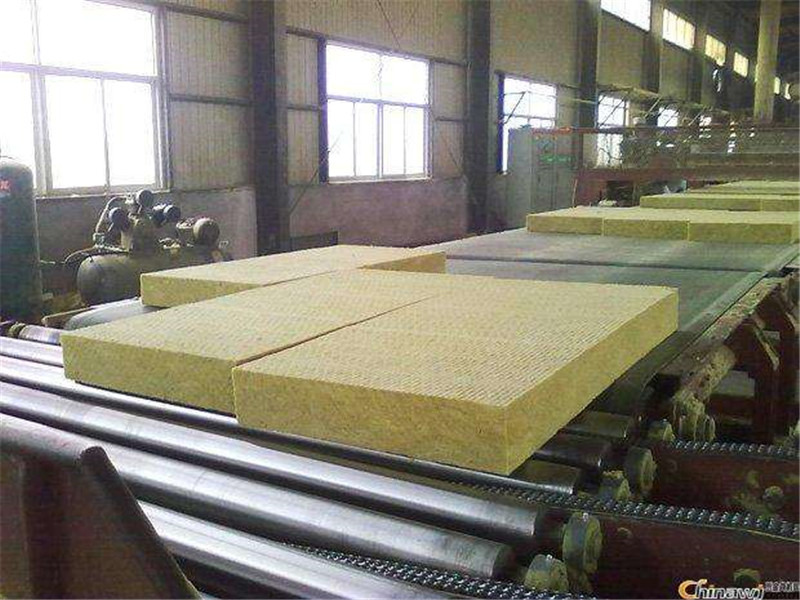
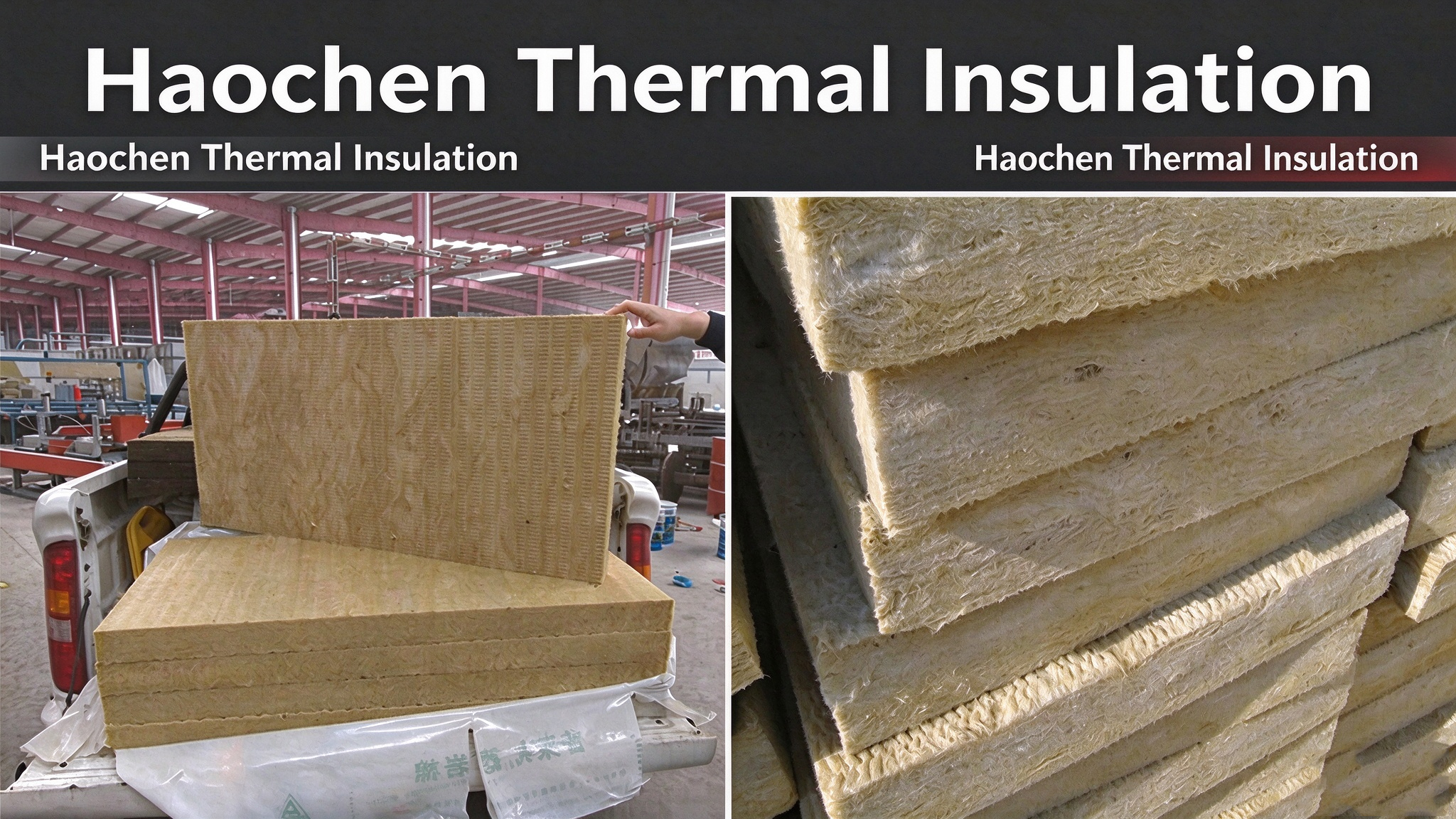
Rock wool board is mainly made of basalt, melted at about 1400℃, centrifuged into fibers, then added with binder for curing and forming. It features high raw material purity, good fiber stability, higher acidity coefficient, outstanding aging resistance and corrosion resistance. During production, the fiber web needs to be pleated before curing, forming an interwoven W-shaped random fiber structure inside the board. The fibers interlock with each other for better integrity.
Mineral wool board is mainly made of blast furnace slag and other metallurgical waste residues, with a melting temperature of around 1200℃. Its raw material composition is complex with more impurities, and its high-temperature stability is weaker than rock wool board. After web forming, it is directly cured without pleating process, so the fibers are relatively straight and loose.
2. Difference in Water Repellency
Both mineral wool board and rock wool board can be produced as water-repellent types. However, rock wool board used for exterior wall projects is generally required to be water-repellent according to industry specifications and acceptance standards. This prevents water absorption, weight gain, insulation failure and board falling off caused by long-term rain and moisture, so as to ensure the long-term safety and stability of the external thermal insulation system. Water-repellent mineral wool board is mostly used in dry or enclosed and protected positions, and is not suitable for direct exposure to rain and high-humidity environments.
3. Application Scenarios and Construction Methods
Rock wool board has excellent mechanical properties and is specially suitable for exterior wall thin-plaster thermal insulation systems. It is the mainstream material for external thermal insulation of high-rise building exterior walls. The internal W-shaped random fiber structure formed by pleating greatly improves its tensile and tear resistance, meeting the load, wind resistance and crack resistance requirements of exterior wall insulation.
Mineral wool board has low mechanical strength and is not suitable for exterior wall thin-plaster construction. It is mostly used for curtain wall filling insulation, industrial equipment insulation, thermal pipeline insulation and indoor sound insulation. It is generally installed in enclosed cavities or dry indoor environments.
4. Density Comparison
Density range of mineral wool board: 45–120kg/m³. It has a wide density range. Low-density products are mainly for indoor sound absorption, and high-density ones for curtain wall and pipeline insulation.
Density range of rock wool board: 120–200kg/m³. For exterior wall thin-plaster projects, specifications of 140kg/m³ and above are generally selected. Combined with the pleated random fiber structure, it guarantees the integrity and mechanical indicators of the board.
5. Compressive Strength and Tensile Strength (Core Difference)
This is the most critical difference between the two, which directly determines whether the material can be used in a project and where it can be applied.
Benefiting from the W-shaped interwoven random fiber structure formed by pleating, rock wool board has stable mechanical indicators: compressive strength 40–60kPa, tensile strength 7.5–15kPa. The interlocked fibers can bear the load and wind pressure of the exterior wall thin-plaster system and meet the anti-pulling requirements of the external thermal insulation system.
Mineral wool board has no pleating process and loose fiber arrangement. Its compressive strength and tensile strength are generally low. The board itself has poor tensile and tear resistance. It cannot bear the stress of the exterior wall thin-plaster system. Improper use will easily lead to falling off, cracking and other potential safety hazards.
6. Suggestions for Procurement and Construction
When selecting materials for projects, we should not only focus on the common features of appearance and Class A fire resistance. Material selection should be combined with construction technology, stress requirements and service environment. For exterior wall thin-plaster projects, basalt water-repellent rock wool board is preferred. For curtain wall cavities, equipment and pipeline insulation, indoor sound insulation, mineral wool board can be selected according to construction drawings.
Meanwhile, check the test report during procurement, focusing on parameters such as density, compressive strength, tensile strength and water repellency rate, to avoid wrong material selection and subsequent engineering quality risks.
7. Customization Service
Haochen Thermal Insulation Materials Co., Ltd. Both rock wool board and mineral wool board can be customized as required. We can produce various products with different sizes, densities, thicknesses and water repellency properties according to project requirements. Our products are widely applicable to exterior wall insulation, curtain wall, equipment and pipeline insulation, indoor noise reduction and other engineering needs. We provide matched thermal insulation solutions for construction units and general contractors.
Previous Article
Rock Wool Board vs EPS vs XPS:Next Article
Is Rock Wool Board Fire ResistShare


 Guides
- Is Rock Wool Board Fire Resistant?
- Rock Wool Board vs EPS vs XPS: Which Insulation Material Is Better?
- Why Choose Stone Wool Insulation?
- Why Choose Rock Wool Insulation Board?
- Will it burn? Fire safety & non-combustible building materials
- Fire-Resistant Internal Wall Insulation Boards
- Thermal & Acoustic Internal Wall Insulation Rock Wool
- How to Install Stone Wool Board for External Wall Insulation
- How to Insulate an Internal Wall with Rock Wool Boards
 Hot Picks